Every online slot in Britain comes with a percentage buried in its help screen, usually something like 96%. Most players have seen it. Far fewer could say what it promises, and the honest answer is: much less than it seems to.
RTP and volatility are the two numbers that describe how an online slot pays. RTP tells you how much of the money staked the game is designed to hand back over its lifetime. Volatility tells you how unevenly it does that. You need both, and the second one is the one nobody prints.
What RTP actually measures on an online slot
RTP stands for return to player. The Gambling Commission describes it as the part of the money paid to play a machine that comes back as prizes, and it is blunt about the limits. In its own guidance for players, it says that if a machine displays an 85% RTP, you should not expect to win an average of 85 pence for every £1 you stake during a playing session. The figure "is an average achieved over a significant number of game plays and not each time the gaming machine is played."
That sentence is the whole topic in miniature. RTP is a property of the game across millions of spins, not of your evening. A slot with a 96% RTP is designed so that, over its entire life, it keeps around 4p of every £1 staked and returns the rest. Across one session of a few hundred spins, almost anything can happen.
The figure is worked out from the maths of the game: every symbol position, every reel strip, every feature. Online, the Commission refers to this as the theoretical RTP, meaning the designed return, and its guidance notes that it is also the figure advertised in the game rules shown to players.
A worked example from the regulator
The Commission publishes a short example for operators that is more useful to players than most explainers. A game designed with a 91.68% RTP has taken £1,200,000 in turnover and paid out £1,085,000 in wins. Divide one by the other and the actual RTP is 90.42%, below the designed figure.
Two details are worth pulling out. First, turnover means every stake, including money that was won and staked again. If you start with £50 and play £1 spins until it runs out, your turnover can easily be several hundred pounds. Second, even across more than a million pounds of play, the real return in that example still sat over a percentage point away from the design. The Commission's guidance says the acceptable gap narrows as play volume grows and depends on the game's volatility.
Here is the arithmetic for a single player. At £1 a spin, 200 spins is £200 of turnover. At 96% RTP, the long-run expected cost of that turnover is £8. In practice you are very unlikely to lose exactly £8. You might be £60 down, or £150 up after one feature. The £8 only becomes visible when you add your session to millions of others.

Same game, different RTP
This is the part that catches people out. Many studios release the same slot in several RTP versions, and the casino picks which one to run. Play'n GO's Book of Dead, released on 14 January 2016, is the standard example. Its headline RTP is 96.21%, but it is also available at 94.25%, 91.25%, 87.25% and 84.18%. Same graphics, same features, same Rich Wilde. The difference is in the maths.
NetEnt's Starburst shows how small the gaps between sources can be. NetEnt's own game page lists the RTP at 96.08%, while many review sites print 96.09%, and some casinos run lower settings. Big Time Gaming's page for Bonanza gives 96.00%.
The only figure that counts is the one inside the game you are actually playing. Open the help or paytable screen and look for "RTP" or "return to player". If two sites offer the same title, the numbers in those screens can differ, and over a long time a gap of two or three percentage points adds up to real money.
Volatility, the number nobody regulates
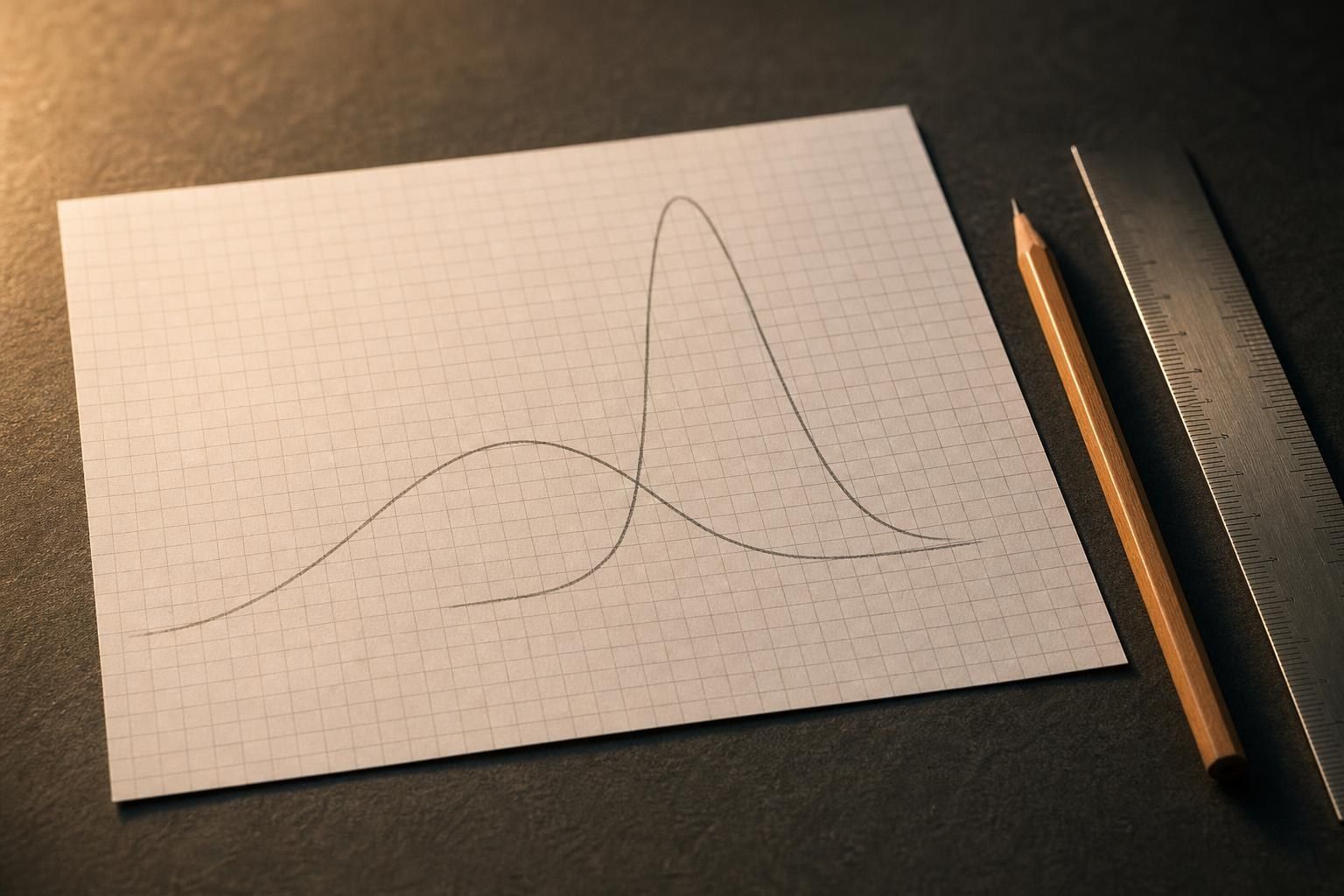
Volatility (sometimes called variance) describes the shape of the returns. A low-volatility slot pays small amounts often. A high-volatility slot can go a long time with very little and then pay a large amount in one go. Two games with exactly the same RTP can feel completely different because of it.
There is no regulated definition of volatility and no standard scale. One studio's "high" is another's "medium", and many provider pages simply leave the field blank. NetEnt's Starburst page, for example, has a volatility label with no value next to it. Book of Dead is a good illustration of the confusion: review sites describe it as anything from medium-high to very high.
So you have to read the clues instead. Three are useful:
- Maximum win. Book of Dead's top win is 5,000x the stake. A slot whose ceiling is a few hundred times the stake simply cannot be very volatile, because there is nowhere for the big swings to come from.
- Hit frequency, where the studio publishes it. NetEnt lists Starburst's hit frequency at 23%, meaning roughly one spin in four or five returns something. That alone tells you a lot about how the game will feel.
- Where the money sits. If the paytable for ordinary symbols is tiny and the features promise multipliers or expanding symbols, most of the RTP is locked inside the bonus round. You will spend long stretches waiting for it.
| What you want to know | RTP tells you | Volatility tells you |
|---|---|---|
| How much the game keeps over its lifetime | Yes | No |
| How often small wins land | No | Roughly |
| How big the swings in a session are | No | Yes |
| What will happen in your next 100 spins | No | No |
What the UK rules add on top
Online slots in Great Britain are for adults only (18+) and are regulated by the Gambling Commission. Several of its rules work on the same problem as volatility: how fast money can move.
Since 31 October 2021, online slots must take at least 2.5 seconds per game cycle, autoplay is banned, and features such as turbo spins and slam stops are not allowed. Celebrations for "wins" that return no more than the stake are banned too, because a 40p return on a 50p spin is a loss dressed up as a win. Every session must show your net position and the time you have been playing.
Stake limits came later. The £5 maximum stake per spin for all adults went live on 9 April 2025, and the £2 maximum for adults aged 18 to 24 went live on 21 May 2025. Combined with the 2.5-second minimum, that puts a hard ceiling on turnover. At £5 a spin and the fastest legal pace, an hour of play still means up to £7,200 staked, and at 96% RTP the expected cost of that is £288. Not every session reaches that pace, but the figure is worth knowing.
None of this changes the core point. RTP is a long-run average and volatility describes the swings around it, so neither can tell you whether today is a good day to play. If you want the history of people trying to read patterns in random outcomes anyway, the story of the gambler's fallacy at Monte Carlo in 1913 is the classic case. Progressive jackpot games add another layer, since part of every stake feeds the prize pot; we look at how that works in progressive jackpots explained. Setting limits on time and money is covered on our responsible gambling page.
Frequently asked questions
What is a good RTP for an online slot?
Many popular slots are published at around 96%, such as Book of Dead at 96.21% and Bonanza at 96.00%. The figure still varies from game to game, and between versions of the same game.
Does a higher RTP mean I will win more?
Not in a single session. RTP is an average over a very large number of spins. A higher RTP lowers the expected cost of play over time, but short sessions are dominated by luck and volatility.
Where can I find a slot's RTP?
In the game's help, information or paytable screen. Check it inside the casino you are using, because the same slot can be offered at different RTP settings.
Is high volatility better than low volatility?
Neither is better. High volatility means longer dry spells and rarer, bigger wins; low volatility means smaller, more frequent wins. With the same RTP, both cost the same on average over the long run.